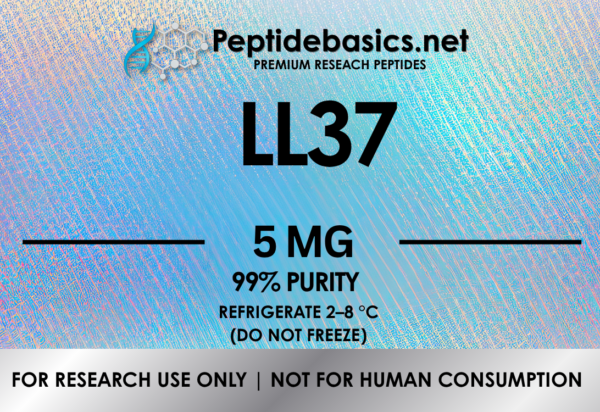
LL-37 (also known as human cathelicidin or hCAP-18 C-terminal fragment) is a 37-amino acid cationic antimicrobial peptide (AMP) naturally produced by immune cells and epithelial tissues. It plays a key role in innate immunity with broad-spectrum antimicrobial, antiviral, antifungal, and immunomodulatory activities. In research settings, synthetic LL-37 is studied for its potential in wound healing, infection control (including against antibiotic-resistant bacteria and biofilms), inflammation modulation, and other therapeutic areas.1
Safety Profile in Research
LL-37 is primarily handled as a research chemical or tool for in vitro, ex vivo, and preclinical studies. It is not FDA-approved for human therapeutic use or consumption. The FDA has placed it in a category noting insufficient safety data for certain compounding uses, highlighting potential risks when administered to humans outside controlled research. Vendors and monographs explicitly state it is for laboratory research only (e.g., in vitro testing, not for human or veterinary use).