

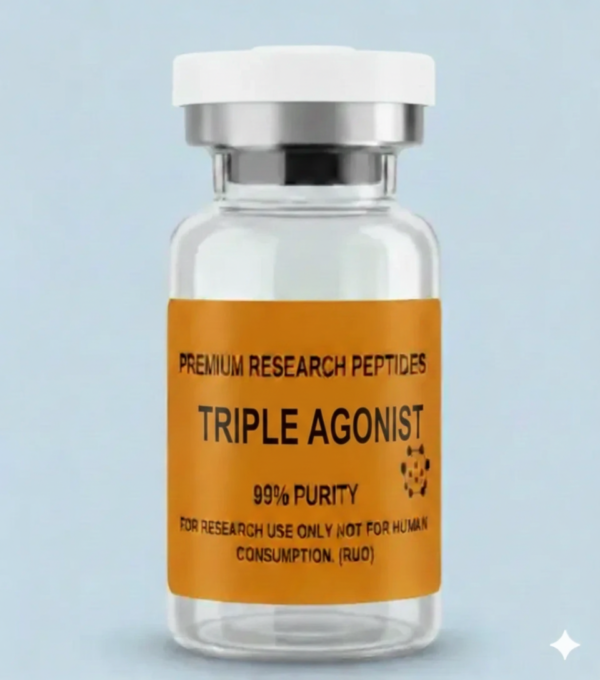
(Triple Agonist) – 15mg Premium Research Peptide for Advanced Metabolic Pathway Studies
Explore (), a state-of-the-art synthetic peptide engineered as a triple receptor agonist that simultaneously targets GLP-1, GIP, and glucagon receptors. This high-potency research compound is ideal for in vitro and laboratory investigations into synergistic metabolic pathways, incretin hormone signaling, glucagon-mediated effects, energy homeostasis, glucose regulation, and multi-hormone interactions in controlled experimental models.
Available in a convenient 15mg lyophilized powder vial, Reta offers researchers exceptional stability and solubility for precise reconstitution and dosing in metabolic, endocrine, and obesity-related pathway studies. As a cutting-edge triple agonist peptide, it enables deeper analysis of how combined receptor activation influences lipid metabolism, insulin sensitivity, appetite signaling, and overall energy expenditure—key areas in non-clinical research.
Why Researchers Choose Peptide Basics for Retatrutide (Reta) 15mg
At Peptide Basics, we prioritize quality, transparency, and reliability for the research community. Our Reta research peptide stands out with:
- ≥99% Purity Guaranteed – Independently verified via HPLC and mass spectrometry for batch-to-batch consistency and reproducible experimental outcomes. View our third-party testing process.
- Lyophilized Powder Form – Maximizes long-term stability, ease of storage at -20°C, and transport without degradation.
- Fast, Discreet USA Domestic Shipping – Typically 2–3 business days with full tracking and secure packaging.
- Full Certificate of Analysis (COA) – Provided with every order for complete transparency and compliance in academic, biotech, or pharmaceutical research labs.
- Strictly Research-Grade Only – Intended solely for in vitro laboratory use, not for human consumption, veterinary applications, or therapeutic purposes. Not FDA-approved for any medical use.
Key Research Applications of Retatrutide Triple Agonist Peptide
Retatrutide’s unique multi-receptor profile makes it a powerful tool for studying complex metabolic interactions beyond single- or dual-agonist models. Researchers use this compound to explore:
- GLP-1, GIP, and Glucagon Receptor Signaling Pathways
Examine receptor binding affinities, downstream cascades (e.g., cAMP, PKA), potential crosstalk, and synergistic activation in cell-based assays or tissue models. - Metabolic Regulation and Energy Homeostasis Mechanisms
Investigate molecular effects on glucose uptake, lipid oxidation, insulin signaling, brown adipose tissue activity, and total energy expenditure in non-human models. - Appetite Regulation, Satiety, and Feeding Behavior Studies
Analyze central nervous system and peripheral pathways involved in hunger suppression, meal size control, and neuroendocrine feedback loops. - Pharmacokinetics, Stability, and Multi-Receptor Dynamics
Study peptide half-life, bioavailability, binding kinetics, dose-response relationships, and interactive effects across the three receptor families under varied experimental conditions. - Models of Metabolic Disorders (Non-Clinical)
Support exploratory research into obesity-related mechanisms, hepatic lipid accumulation, fatty liver models, and endocrine imbalances—always strictly in vitro or preclinical settings.
For related research compounds targeting similar pathways, explore our metabolic peptides collection or other high-purity options like semaglutide analogs.
Retatrutide (Reta) 15mg Product Specifications
| Specification | Details |
|---|---|
| Peptide Name | (Reta Triple Agonist) |
| Quantity per Vial | 15mg |
| Purity | ≥99% (verified by HPLC and mass spectrometry) |
| Form | Lyophilized powder |
| Molecular Formula | Research-grade synthetic peptide (sequence not for therapeutic reference) |
| Storage | Store lyophilized at -20°C; reconstituted per lab protocols |
| Intended Use | Laboratory research only – not for human or animal use |
Important Disclaimer: All products from Peptide Basics are sold exclusively for scientific research and laboratory investigation. They are not intended for diagnostic, therapeutic, or human consumption purposes. Always consult institutional guidelines and handle with appropriate safety measures.