


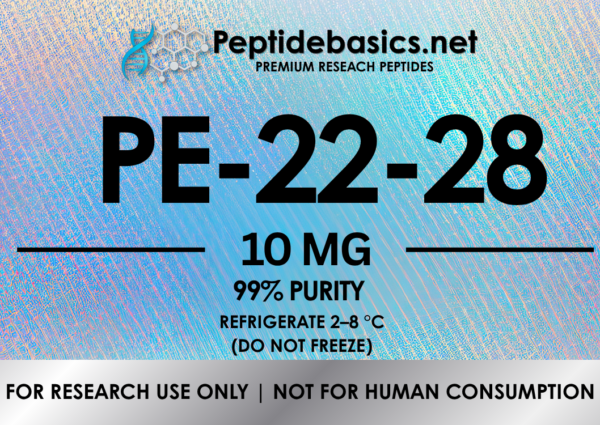
PE-22-28 (also known as Mini-Spadin) is a synthetic heptapeptide with the amino acid sequence GVSWGLR (Gly-Val-Ser-Trp-Gly-Leu-Arg). It is a shortened, optimized analog of spadin (PE 12-28), an endogenous peptide derived from the protein sortilin that acts as an antagonist of the TREK-1 (TWIK-related K⁺ channel 1, also known as KCNK2) potassium channel.1
Research Description and Mechanism
The primary research focus on PE-22-28 is its potential as a fast-acting antidepressant and neurogenic agent. It potently and selectively inhibits the TREK-1 channel (IC₅₀ ≈ 0.12 nM, significantly more potent than spadin’s 40–60 nM). This blockade increases neuronal excitability, enhances serotonin neurotransmission, upregulates brain-derived neurotrophic factor (BDNF), promotes synaptogenesis (e.g., increased PSD-95 levels), and stimulates hippocampal neurogenesis.2
Key preclinical findings (primarily from mouse models in the foundational 2017 study by Djillani et al.):
- Antidepressant-like effects: Significant reduction in immobility time in the forced swim test (FST) after acute or sub-chronic (4-day) treatment at low doses (≈3–4 μg/kg IP). It also improved performance in the learned helplessness test and novelty-suppressed feeding test, including in corticosterone-induced depression models.
- Rapid neurogenesis and synaptogenesis: After only 4 days of treatment, it roughly doubled BrdU-positive cells in the hippocampus and increased markers of synapse formation. This is notably faster than traditional antidepressants.
- Improved pharmacokinetics: Longer duration of action (up to ~23 hours vs. ~7 hours for spadin), better stability, and retained specificity (no significant effect on related channels like TREK-2, TRAAK, or hERG at tested concentrations).2
Additional research suggests potential benefits in anxiety reduction, cognitive enhancement (memory, focus), neuroprotection (e.g., in ischemia models, reducing apoptotic cell death), and stress resilience. It does not appear to disrupt other TREK-1-related functions (e.g., no pro-seizure effects; some studies note protective effects against seizures).3