
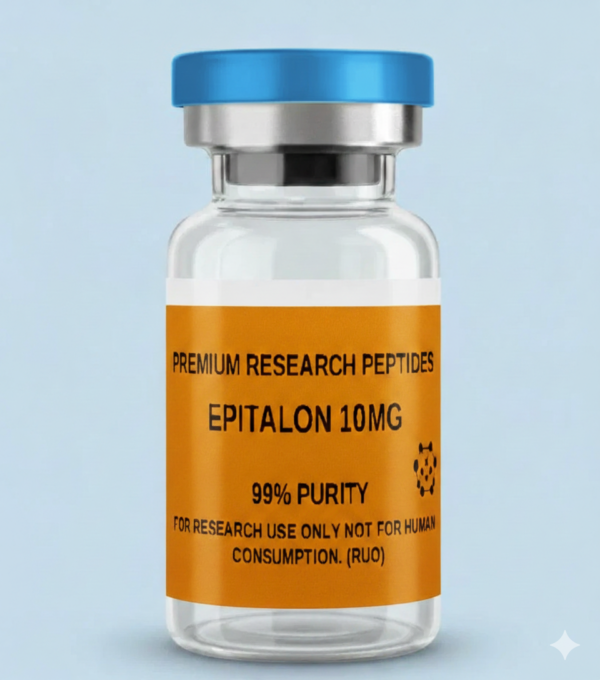
Epitalon 10mg – Research Peptide for Telomerase Activation Studies
Epitalon (also spelled Epithalon, Epithalone, or AEDG) is a synthetic tetrapeptide with the amino acid sequence Ala-Glu-Asp-Gly. Developed by Russian researcher Vladimir Khavinson and colleagues at the St. Petersburg Institute of Bioregulation and Gerontology, it is modeled after epithalamin, a natural polypeptide extracted from the bovine pineal gland. As a research compound, Epitalon has attracted significant interest in longevity, anti-aging, and cellular biology studies due to its potential role in telomerase activation and telomere maintenance.
Telomeres are protective caps at the ends of chromosomes that naturally shorten with each cell division, contributing to cellular senescence. Telomerase, an enzyme, can extend telomeres, potentially supporting extended cellular replicative capacity in research models. Epitalon is studied for its ability to upregulate telomerase activity in various in vitro and in vivo systems.
Key Research Areas for Epitalon Peptide
Preclinical research (primarily in vitro human cell cultures, animal models like mice and fruit flies, and limited small-scale human observations) has explored Epitalon’s effects across multiple aging-related pathways. Note: All findings are from research contexts only and not indicative of human therapeutic outcomes.
- Telomere Lengthening and Cellular Longevity: In human fibroblast cultures, Epitalon has induced telomerase activity, elongated telomeres (on average by ~33% in some studies), and enabled cells to surpass the Hayflick limit. Recent 2025 publications confirm telomere extension in human cell lines via hTERT upregulation or alternative lengthening mechanisms.
- Geroprotective Effects: Animal studies report increased lifespan, reduced chromosomal aberrations, lower spontaneous tumor incidence, and impacts on multiple aging hallmarks including epigenetic regulation, oxidative stress resilience, immune recalibration, and circadian restoration.
- Circadian Rhythm and Melatonin Modulation: Epitalon may enhance melatonin synthesis and influence circadian genes, supporting investigations into sleep quality and pineal gland function in aging models.
- Antioxidant and Neuroprotective Properties: Research indicates reduced oxidative stress, DNA damage protection, and potential benefits in neurogenesis or retinal health models (e.g., diabetic retinopathy wound healing).
- Immune and Endocrine Support: Linked to modulated interleukin-2 expression and broader neuroendocrine effects in preclinical settings.
- Other Investigated Areas: Reduced tumor development in select animal models, improved oocyte maturation in bovine studies, and overall vitality markers.
Recent 2025 Research Highlights on Epitalon
Emerging publications (2025) include:
- Reviews of Epitalon’s multi-pathway bioactive and geroprotective properties.
- Studies demonstrating telomerase upregulation and telomere extension in human cell lines.
- Applications in bovine oocyte maturation and diabetic retinopathy models.
Human data remains limited to small, non-replicated trials (primarily Russian sources), with no large-scale, independent RCTs widely available. Ongoing research continues to explore its mechanisms.
Explore Related Peptides
Interested in other research peptides? Check out our collections:
Safety Profile in Research Contexts
Preclinical and limited human studies suggest Epitalon has a low toxicity profile and is generally well-tolerated. Reported effects in research include mild, transient issues such as:
- Injection site reactions (redness, swelling, irritation)
- Headaches, dizziness, or fatigue
- Minor digestive discomfort or changes in sleep patterns (e.g., vivid dreams)
No severe adverse events are commonly noted in older trials (e.g., multi-year epithalamin studies). However, critical long-term toxicology, pharmacokinetic, and immunogenicity data are lacking as of 2025 reviews. Theoretical concerns exist around telomerase activation potentially influencing cell growth in malignancy contexts—contraindicated in such models without specialist oversight.
Epitalon is not FDA-approved (or equivalent) for any medical, therapeutic, or supplemental use and is classified strictly as a research chemical.
Critical Legal & Safety Information
RESEARCH USE ONLY (RUO) – NOT FOR HUMAN OR THERAPEUTIC USE. No clinical safety or efficacy data exists for human application. Researchers must comply with all institutional, state, federal, and international guidelines.