
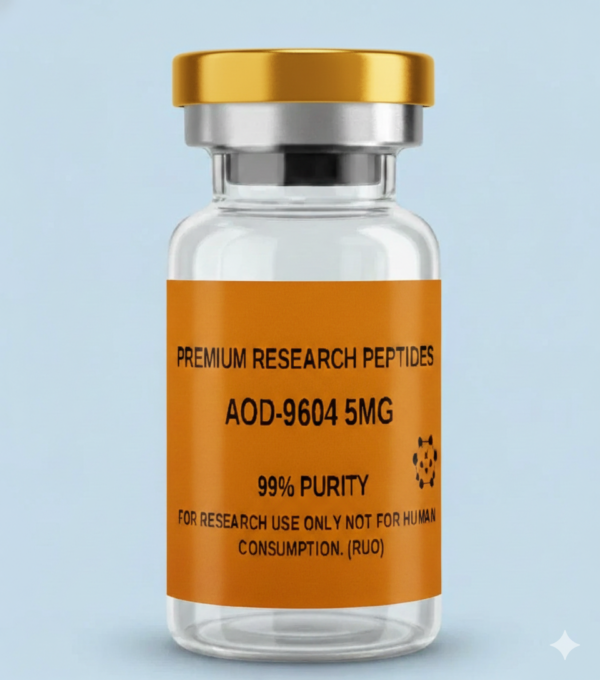
AOD-9604 5mg | Premium >99% Pure Research Peptide for Lipolysis & Metabolic Studies
Explore AOD-9604 5mg at Peptide Basics — your trusted source for high-purity laboratory research peptides. Our AOD-9604 is synthesized to exceed >99% purity (verified by HPLC), making it ideal for advanced investigations into fat metabolism, lipolysis mechanisms, obesity models, and regenerative tissue research. Researchers worldwide rely on Peptide Basics for consistent quality and molecular integrity in metabolic and adipose-focused experiments.
Whether you’re studying targeted fat oxidation without IGF-1 elevation or comparing metabolic regulators, our research peptide collection delivers precision-grade compounds. Order AOD-9604 5mg today for reliable, reproducible results in your lab.
What is AOD-9604? The hGH Fragment 177-191 Explained
AOD-9604, often called the “Advanced Obesity Drug” or hGH Fragment 177-191, is a synthetic peptide analog derived from the C-terminal region of human growth hormone (hGH). This 16-amino-acid sequence (residues 177–191) includes an added N-terminal tyrosine for enhanced stability and bioavailability in research settings.
Unlike full-length hGH, which can influence broad growth pathways and insulin dynamics, AOD-9604 isolates the lipolytic domain. It promotes fat breakdown while avoiding stimulation of IGF-1 production or negative effects on glucose homeostasis — a key advantage for selective metabolic research. For related studies, consider our RETA 15mg or browse additional high-purity options in the peptide shop.
Mechanism of Action: Lipolysis Stimulation & Lipogenesis Inhibition
Research indicates AOD-9604 mimics hGH’s regulation of adipose tissue through targeted pathways in adipocytes:
- Enhanced Lipolysis: Increases breakdown of triglycerides into free fatty acids and glycerol, supporting fat mobilization in obesity models.
- Reduced Lipogenesis: Inhibits conversion of non-lipid precursors into stored fat, potentially limiting new adipose accumulation.
Additional investigations explore its role in regenerative pathways, including upregulation of proteoglycan and collagen synthesis in chondrocytes. Pair AOD-9604 with regenerative compounds like our GHK-Cu combos for comprehensive cartilage and tissue repair data. Always use premium reconstitution solution to maintain peptide stability during experiments.
Technical Specifications & Molecular Data
| Molecular Formula | C78H123N23O23S2 |
| Molecular Weight | 1815.1 Da |
| CAS Number | 221231-10-3 |
| Sequence | Tyr-Leu-Arg-Ile-Val-Gln-Cys-Arg-Ser-Val-Glu-Gly-Ser-Cys-Gly-Phe |
| Purity | >99% (HPLC Verified) |
| Form | Lyophilized powder (5mg vial) |
Key Research Applications & Notable Findings
AOD-9604 continues to attract attention in metabolic, obesity, and musculoskeletal studies for its specificity and favorable profile:
- Obesity & Weight Models: In obese Zucker rats, AOD-9604 treatment reduced body weight gain by over 50% versus controls over 19 days, with increased adipose lipolytic activity.
- Insulin & Glucose Dynamics: Unlike full hGH, it shows no adverse impact on insulin sensitivity in euglycemic clamp studies.
- Joint & Cartilage Research: Emerging data from osteoarthritis models suggest benefits when combined with hyaluronic acid, improving joint function and cartilage integrity.
- β3-Adrenergic Receptor Upregulation: Chronic administration in models increases expression of key lipolytic receptors in fat tissue.
These findings position AOD-9604 as a valuable tool for studying targeted fat metabolism without broader hormonal disruption. For best practices in peptide handling and storage, check our peptide research blog.
Storage & Laboratory Handling Guidelines
Store lyophilized AOD-9604 5mg at -20°C for optimal long-term stability. After reconstitution, keep at 2-8°C and use promptly to minimize degradation. Proper sterile technique and bacteriostatic water are essential for experimental accuracy.