

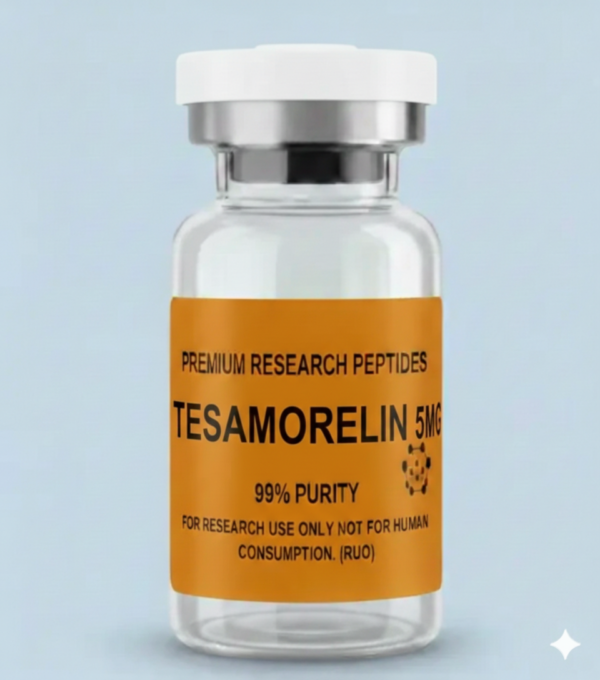
Tesamorelin 5mg: Premium Research Peptide for GH Secretion Analysis
What is Tesamorelin 5mg?
Tesamorelin 5mg is a high-purity synthetic peptide that acts as a growth hormone-releasing hormone (GHRH) analog. Developed for advanced scientific research, this research chemical is widely utilized in laboratory studies exploring the mechanisms of growth hormone (GH) secretion and its implications in metabolic and endocrine pathways. As a potent tool in peptide research, Tesamorelin enables researchers to investigate GH dynamics in controlled in vitro environments.
In the realm of growth hormone releasing factor studies, Tesamorelin stands out due to its specific sequence modifications that enhance stability and efficacy in experimental settings. This makes it an essential compound for professionals conducting endocrine peptides research.
Key Benefits of Tesamorelin in Research Applications
Researchers leveraging Tesamorelin 5mg for GH secretion studies benefit from its targeted action on the pituitary gland’s somatotroph cells. Key research advantages include:
- Enhanced understanding of pulsatile GH release patterns in metabolic models.
- Support for investigations into lipolytic effects and body composition alterations in vitro.
- Facilitation of studies on insulin-like growth factor-1 (IGF-1) modulation without direct hormonal interference.
- High solubility and stability for reliable laboratory peptides protocols.
These attributes position Tesamorelin as a cornerstone in peptide research, particularly for those delving into age-related metabolic changes or therapeutic analog development.
How Tesamorelin Works in Experimental Contexts
The mechanism of Tesamorelin involves binding to GHRH receptors, thereby stimulating the adenylate cyclase pathway and increasing intracellular cAMP levels. This cascade ultimately promotes GH synthesis and release, providing a robust model for metabolic research. In laboratory experimentation, Tesamorelin’s pharmacokinetics—such as its half-life and receptor affinity—offer valuable data for comparative GHRH analog analyses.
Unlike natural GHRH, the modified structure of Tesamorelin resists enzymatic degradation, ensuring prolonged activity in cell culture assays. This feature is critical for longitudinal studies in endocrine research.
Research Dosage and Handling Guidelines
For in vitro applications, researchers typically reconstitute Tesamorelin 5mg in bacteriostatic water to achieve desired concentrations, such as 1-2 mg/mL for initial stock solutions. Experimental protocols often involve serial dilutions to test dose-response relationships in GH secretion assays. Always adhere to sterile techniques and store lyophilized vials at -20°C to maintain integrity.
Note: All handling must comply with biosafety level 2 standards in controlled laboratory environments.
Potential Side Effects Observed in Research Models
In non-clinical research settings, Tesamorelin has been associated with observations such as elevated IGF-1 levels, mild injection site reactions in animal models, and transient glucose fluctuations. These findings underscore the importance of monitoring endpoints in research chemical studies to delineate safety profiles for future analog designs.