
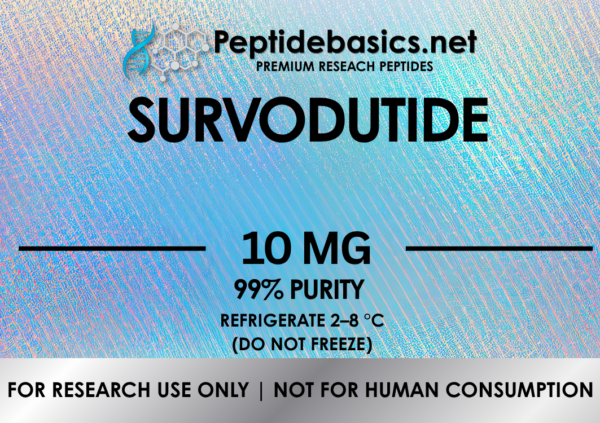
Survodutide (BI 456906) is an investigational long-acting peptide and dual agonist of the glucagon receptor (GCGR) and glucagon-like peptide-1 receptor (GLP-1R). It is a 29-amino-acid acylated peptide (with a C18 fatty acid side chain for once-weekly subcutaneous dosing) developed by Boehringer Ingelheim in collaboration with Zealand Pharma. It is not approved by any regulatory authority for any use.1
Mechanism of Action
Survodutide is designed with a bias toward GLP-1R activation while also engaging GCGR. GLP-1R agonism reduces appetite, slows gastric emptying, and promotes satiety. GCGR agonism increases energy expenditure (via thermogenesis, lipolysis, and hepatic effects), directly reduces liver fat, and supports metabolic improvements in the liver. This dual action aims to achieve greater weight loss and liver benefits than GLP-1 mono-agonists alone, with preserved glycemic effects.1
Research and Efficacy Summary
Clinical research (primarily Phase 2 and emerging Phase 3) has focused on obesity/overweight, type 2 diabetes, and metabolic dysfunction-associated steatohepatitis (MASH, formerly NASH) with fibrosis.
Obesity/Overweight (without T2D): In a Phase 2 dose-ranging trial, survodutide produced dose-dependent weight loss up to ~15% (or higher in some analyses) at doses like 4.8 mg weekly after ~46 weeks, significantly outperforming placebo. Recent Phase 3 SYNCHRONIZE-1 topline results (April 2026) showed up to 16.6% average weight loss (efficacy estimand) or ~17.8 kg after 76 weeks vs. ~3.2% with placebo; up to 85% of participants achieved ≥5% weight loss. Weight loss was predominantly fat mass, with reductions in waist circumference. Earlier Phase 2 data suggested up to ~19% in some contexts. Meta-analyses report average 7–9% (or more at higher doses) body weight reduction over 4–11 months.2
MASH with Fibrosis: In a Phase 2 biopsy-confirmed trial (48 weeks), 43–62% of participants on survodutide (2.4–6.0 mg) achieved MASH improvement without worsening of fibrosis (vs. 14% placebo). Liver fat reduction ≥30% occurred in 57–67% (vs. 14% placebo), and fibrosis improvement (≥1 stage) in ~34–36% (vs. 22% placebo). It also improved non-invasive liver markers.3
Other: Improvements in HbA1c, blood pressure, lipids, and liver parameters have been observed. Phase 3 programs (SYNCHRONIZE series, LIVERAGE) are ongoing or recently reported for broader populations, including cardiovascular outcomes.